A sudden change in the Middle East has caused international oil prices to surge, rendering any talk of easing cost pressures on healthcare products meaningless?
Jun 09, 2026
According to Xinhua News Agency and CCTV News, early morning Beijing time on June 8, the Israeli Defense Forces confirmed that its air force launched airstrikes against military targets in western and central Iran. Explosions were heard in multiple locations including Tehran, Tabriz, and Isfahan. The Iranian Islamic Revolutionary Guard Corps subsequently confirmed that Israel had used air-launched missiles to attack targets within Iran. Iran has made further military preparations and warned that it would take larger-scale strikes if the situation escalates.
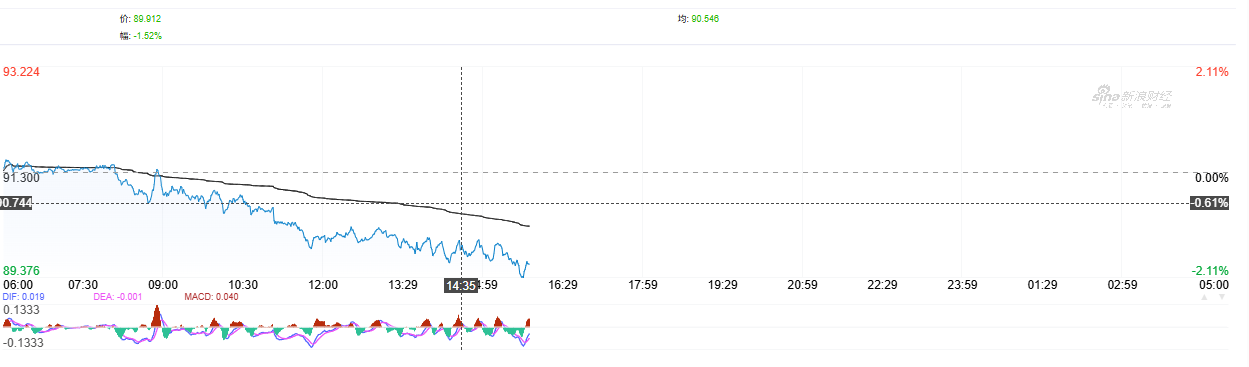
In the preceding days, Israel had launched multiple airstrikes against Beirut and other locations in Lebanon, while the Iranian Revolutionary Guard also carried out a "warning strike" against an Israeli airbase in northern Israel. This sudden military escalation directly shattered the brief calm achieved through previous US mediation. As a result, international oil prices surged, with both WTI and Brent crude rising by more than 4%, and New York crude futures prices briefly soaring to $94.31 per barrel, placing oil prices back in a high range.
Following positive signals from the US-Iran negotiations in early June, the industry had high expectations for a price correction in oil. However, today's Israeli airstrikes on Iran have pushed oil prices up again. Since the deterioration of the Middle East situation in March, international oil prices have risen from the $70 range to over $90, with Brent crude oil seeing a cumulative increase of over 30%.
For the hygiene products industry, the supply chain transmission path from crude oil to diapers and sanitary napkins is clear and rigid. Petrochemical raw materials account for 60% to 80% of the production cost of diapers and sanitary napkins—polypropylene (PP), the raw material for the top and bottom non-woven fabrics, has recently increased by over 35%; super absorbent polymer (SAP), which relies on acrylic acid (a petroleum derivative), accounts for nearly 30% of the raw material cost of diapers; and the hot melt adhesives that bond the various layers of the product structure are direct products of petroleum cracking.
This renewed rise in oil prices means that the high operating level of supply chain costs will be further prolonged, and the previously anticipated window for "cost easing" has been completely closed.
It is worth noting that the Japanese market has already begun to raise prices. Daio Paper, Unicharm, and Kao, Japan's three major hygiene product giants, have announced price adjustments, signifying a comprehensive cost transmission cycle in the global hygiene product supply chain.
For the domestic hygiene product industry, the challenge has shifted from soaring individual costs to systemic pressure. Overall raw material costs have increased by approximately 20% since the beginning of the year. It's noteworthy that this cost transmission is not happening simultaneously—the Japanese market has already raised prices, while competition in the Chinese market is even more intense, making it highly uncertain whether brands can successfully pass on costs. Leading brands can absorb some costs through large-scale procurement, inventory buffers, and product structure optimization, but the profit margins of small and medium-sized manufacturers are being drastically compressed, facing the dilemma of "selling at a loss if prices don't rise, and losing market share if prices do rise."
In the domestic market, where competition is fierce, price wars are escalating, and high costs are becoming a catalyst for accelerating the elimination of outdated production capacity. A new round of industry reshuffling may have already begun, with competition shifting from marketing and channel battles to a comprehensive contest of supply chain resilience, cost control efficiency, and product differentiation capabilities.